Recycling and Sustainability at Ham Storage
 At Ham Storage, sustainability is built into everyday operations, from how waste is separated on site to how collections are planned across the local area. Our approach to recycling in Ham focuses on practical action: reducing landfill use, improving sorting quality, and supporting a cleaner circular economy. We aim to make responsible disposal simple, efficient, and aligned with the expectations of residents and businesses who want their storage choices to reflect environmental values.
We have set a clear recycling percentage target across our operations, with the goal of diverting at least 85% of suitable waste and reusable materials away from landfill. This target supports a wider commitment to lower-impact storage services and better resource recovery. For a facility like Ham Storage, success depends on consistent separation at source, regular review of disposal routes, and selecting partners who share the same sustainability priorities.
Our recycling model also reflects how waste is handled across nearby boroughs, where different streams are commonly separated for paper, card, plastics, metals, glass, and general residual waste. In many local areas, borough-led waste separation encourages residents and businesses to sort materials more carefully, and that same principle applies here. By following a similar structure, Ham storage recycling operations can support cleaner loads, higher recovery rates, and less contamination in the wider system.
 Local transfer stations play an important role in this process. We work with approved transfer stations in the surrounding area to ensure that mixed materials are handled efficiently and sent on to the most appropriate recycling or recovery facilities. These local hubs help reduce unnecessary mileage, streamline sorting, and keep materials moving through the chain with less environmental cost. Using nearby transfer points also supports faster turnaround times and helps us make better use of existing waste infrastructure.
Where possible, materials are directed into dedicated recycling streams rather than general waste. This may include cardboard from packaging, scrap metal from storage-related items, clean plastic, and other recyclable components. In boroughs where waste separation is well established, this mirrors the local expectation that materials should be prepared for recovery before they reach the transfer station. By keeping waste quality high, Ham Storage sustainability efforts can contribute to stronger recycling outcomes overall.
We also recognise that not every item belongs in the same stream, which is why our sorting process is designed to support responsible decisions at each stage. Some materials may be suitable for reuse, while others are better handled through specialist recycling routes. This balanced approach helps us avoid avoidable waste and ensures that recycling at Ham Storage is more than a box-ticking exercise; it is a practical system for reducing environmental impact.
 Charitable partnerships are another important part of our sustainability commitment. We aim to work with local charities and community organisations that can give a second life to suitable items such as office furnishings, storage accessories, and other reusable goods. By directing usable materials to charities, we help extend product lifespans and support social value at the same time. This creates a useful link between Ham storage recycling and community benefit.
These partnerships are especially relevant when items are still in good condition but no longer needed in their current setting. Rather than sending them directly into disposal routes, we look for opportunities to pass them on for reuse, refurbishment, or redistribution. That helps reduce demand for new resources while supporting charities that rely on donated goods to serve local needs. In sustainability terms, reuse is often the most effective first step before recycling becomes necessary.
Our charity partnerships also reflect a broader waste hierarchy: reduce, reuse, recycle. For Ham Storage sustainability, this means prioritising reuse wherever possible and keeping recycling for materials that cannot be repurposed. In practical terms, this helps limit waste volumes and ensures that valuable items remain in circulation for longer, rather than being lost to the general waste stream.
 Transport is another area where we are making measurable progress. Our fleet increasingly includes low-carbon vans designed to reduce emissions during local collections and inter-site movements. These vehicles are better suited to short urban routes, helping us lower the carbon footprint associated with routine operations. By investing in low-emission transport, Ham Storage can support recycling goals without creating unnecessary air-quality impacts.
Low-carbon vehicles are particularly useful in areas where frequent stop-start driving is common, such as local borough roads and mixed residential-commercial zones. That makes them a sensible choice for collections linked to waste separation, deliveries, and transfer station runs. As part of our commitment to sustainable storage in Ham, we continue to review vehicle performance, route planning, and fuel efficiency to ensure transport emissions remain as low as possible.
We also look at how smarter scheduling can reduce the number of journeys needed. When collections are grouped efficiently and waste streams are pre-sorted, vans can carry more usable material per trip. This helps cut mileage, reduce congestion, and support a more efficient recycling process. Combined with the use of approved transfer stations and strong on-site segregation, low-carbon transport becomes a central part of our sustainability strategy.
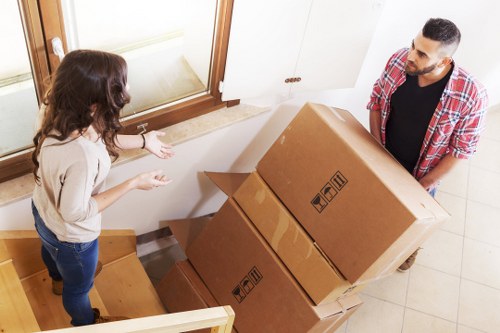 Looking ahead, our aim is to continue improving the environmental performance of Ham Storage through careful measurement and practical action. That includes strengthening our recycling percentage target, expanding reuse opportunities with charities, and keeping transport emissions low through cleaner vehicle choices. It also means staying responsive to local borough approaches to waste separation so that our methods remain relevant, efficient, and effective.
For customers using recycling at Ham Storage, the result is a service that treats waste as a resource, not a burden. By combining local transfer station partnerships, charity-led reuse, and low-carbon vans, we are building a system that supports both environmental responsibility and everyday convenience. Sustainability is not treated as a separate initiative; it is part of how the site operates day to day.
In a changing local landscape where recycling expectations are rising, Ham Storage is committed to keeping pace in a thoughtful, practical way. Through careful waste separation, responsible disposal, and a clear focus on emissions reduction, we aim to make Ham storage sustainability a lasting feature of our service and an example of how storage operations can contribute positively to the environment.